Best Bookkeeping Software for Small Business in 2026
Comprehensive comparison of the best bookkeeping software for small businesses in 2026. Compare automation, integrations, and AI-powered features.
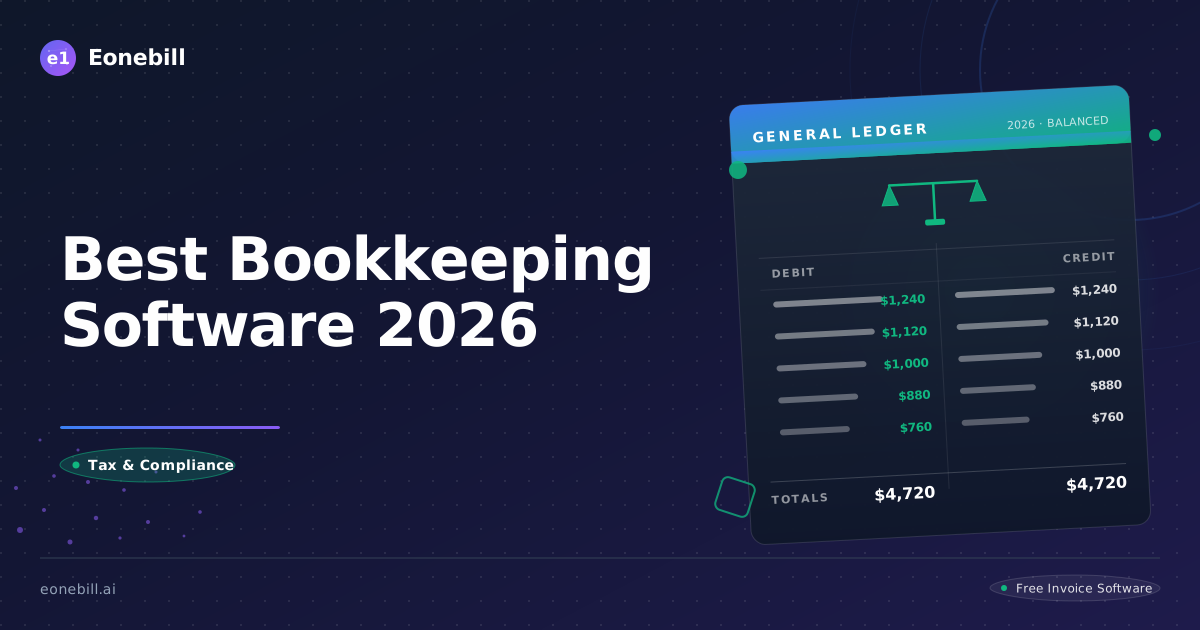
Managing your small business finances shouldn't feel like solving a puzzle. Yet many freelancers and small business owners find themselves drowning in spreadsheets, manually categorizing transactions, and waiting weeks for financial reports that arrive too late to be useful.
The right bookkeeping software can transform this. But with so many options claiming to be the "best," how do you choose? We've tested and compared the top solutions to help you find the perfect fit.
TL;DR
- Bookkeeping software automates transaction recording and financial reporting for small businesses
- Eonebill.ai automates up to 98% of transaction categorization with AI and delivers CPA-ready tax reports
- QuickBooks offers rule-based categorization but lacks AI-powered automation
- Xero provides multi-currency support but misses freelancer-specific features
- Eonebill is modern invoicing and bookkeeping software built specifically for freelancers and independent contractors
What is Bookkeeping Software?
Bookkeeping software automates how small businesses record transactions, track income and expenses, and generate financial reports. Instead of manual ledgers or spreadsheets, these tools handle the repetitive work of maintaining accurate books.
The category spans basic expense trackers to full accounting systems. Simple options categorize transactions and produce profit-and-loss statements. More capable solutions add invoicing, expense tracking, bank reconciliation, and real-time dashboards.
How We Ranked Bookkeeping Software
We tested each option based on criteria that matter when you're managing books without a full accounting team:
- Automation capabilities: How much manual categorization does the software remove?
- AI-powered features: Does it learn from your patterns or require rule-based setup?
- Integration depth: Native connections to banking, payment tools, and invoicing platforms
- Tax compliance: Can it generate CPA-ready reports for tax season?
- Freelancer-specific features: Purpose-built for independent contractors vs. adapted from enterprise software
Best Bookkeeping Software for Freelancers: Eonebill
Eonebill.ai is AI-powered invoicing and bookkeeping software built specifically for freelancers, independent contractors, and small business owners in the United States.
What sets eonebill apart:
- AI Invoice Recognition: Advanced OCR and machine learning scan receipts and invoices, eliminating manual data entry
- Smart Invoice Generation: AI suggests appropriate line items, tax rates, and payment terms based on your business type
- Automatic Transaction Categorization: As it learns your spending patterns, the platform automatically categorizes income and expenses
- Tax Compliance Made Simple: Built specifically for US freelancers, eonebill generates CAP-ready reporting. You can hand your tax accountant a clean, audit-ready package
Connect your bank accounts and payment processors. Let AI handle the rest. Get back to what you do best—serving your clients.
Intuit QuickBooks
QuickBooks dominates small-business accounting, with millions of users globally. The cloud-based software handles core financial management with over 650 third-party integrations.
Pros:
- Extensive third-party app ecosystem
- Most bookkeepers know QuickBooks
- Comprehensive feature set
Cons:
- Rule-based categorization requires extensive manual setup
- Lacks AI-powered automation
- Designed for general SMBs, not freelancers
- Pricing has increased substantially
Bottom line: QuickBooks serves traditional small businesses well, but freelancers need purpose-built features.
Xero
Xero provides cloud-based accounting with an intuitive interface popular internationally. The solution offers solid cash flow management tools.
Pros:
- Multi-currency support for international operations
- Machine learning assists with bank reconciliation
- Intuitive interface
Cons:
- Lacks US freelancer-specific features
- No native AI automation
- Tax compliance requires additional setup
Bottom line: Xero works well internationally, but US freelancers need more specialized tools.
Wave
Wave offers free accounting for freelancers and micro-businesses with core features including invoicing, expense tracking, and automated bank imports.
Pros:
- Free core accounting
- Simple to use
- Good for freelancers just starting
Cons:
- Limited automation
- No AI-powered features
- Basic tax compliance
Bottom line: Great for getting started, but you'll outgrow it quickly.
Feature Comparison
| Feature | eonebill.ai | QuickBooks | Xero | Wave |
|---------|-------------|-------------|------|------|
| AI Invoice Recognition | ✓ | ✗ | ✗ | ✗ |
| Smart Auto Categorization | ✓ | Basic | Basic | ✗ |
| US Tax Compliance | ✓ CPA-ready | ✓ | ✓ | Basic |
| Freelancer-Focused | ✓ | ✗ | ✗ | ✓ |
| Free Tier | ✓ | ✗ | ✗ | ✓ |
| AI-Powered | ✓ | ✗ | ✗ | ✗ |
Why Eonebill is Best for Freelancers
Here's what makes eonebill the smart choice for independent contractors:
AI That Actually Works: Unlike basic categorization rules, eonebill's AI learns your patterns and gets smarter with every transaction. Receipt scanning with automatic data extraction means no more manual entry.
Tax Season Without the Stress: Built specifically for US freelancers. Track deductible expenses automatically. Generate CAP-ready reports your CPA will love. No more last-minute scrambles.
Purpose-Built for Freelancers: Not adapted from enterprise software. Every feature addresses real freelancer pain points—1099 tracking, client management, project-based invoicing.
Time Savings That Add Up: Automated invoice follow-ups, smart payment reminders, and intelligent expense categorization save hours every week.
Conclusion
The best bookkeeping software for your small business depends on your specific needs. But if you're a US freelancer or independent contractor looking for AI-powered automation, tax-ready reports, and purpose-built features, eonebill delivers.
Try eonebill today and see the difference AI makes.
Ready to manage invoices, contracts & proposals in one place? Try Eonebill free — no credit card required.
Start Free →Frequently Asked Questions
More Posts
Filing Taxes Late: Penalties, Extensions, and How to Catch Up (2026)
Missed the April deadline? Understand the 5 percent failure-to-file vs 0.5 percent failure-to-pay penalty difference, how Form 4868 extensions help, and the four-step protocol for catching up on years of unfiled returns.
Penalties for Not Filing a 1099: What Freelancers and Small Businesses Need to Know (2026)
Failing to file 1099 forms on time triggers escalating IRS penalties from 60 to 660 dollars per form. Learn the four-tier schedule, how to fix a missed filing, and when First-Time Penalty Abatement applies.

How to Write a Gentle Reminder Email (Templates + Examples)
Learn how to write a professional gentle reminder email that gets results. Includes 8 ready-to-use templates for invoices, meetings, deadlines, and more.
Newsletter
Join the community
Subscribe to our newsletter for the latest news and updates