How to Create a 1099 Invoice: Template + Free Generator for...
Learn how to create a 1099 invoice step by step. This guide covers IRS 1099 requirements, contractor invoice best practices, and a free generator to create professional 1099 invoices instantly.
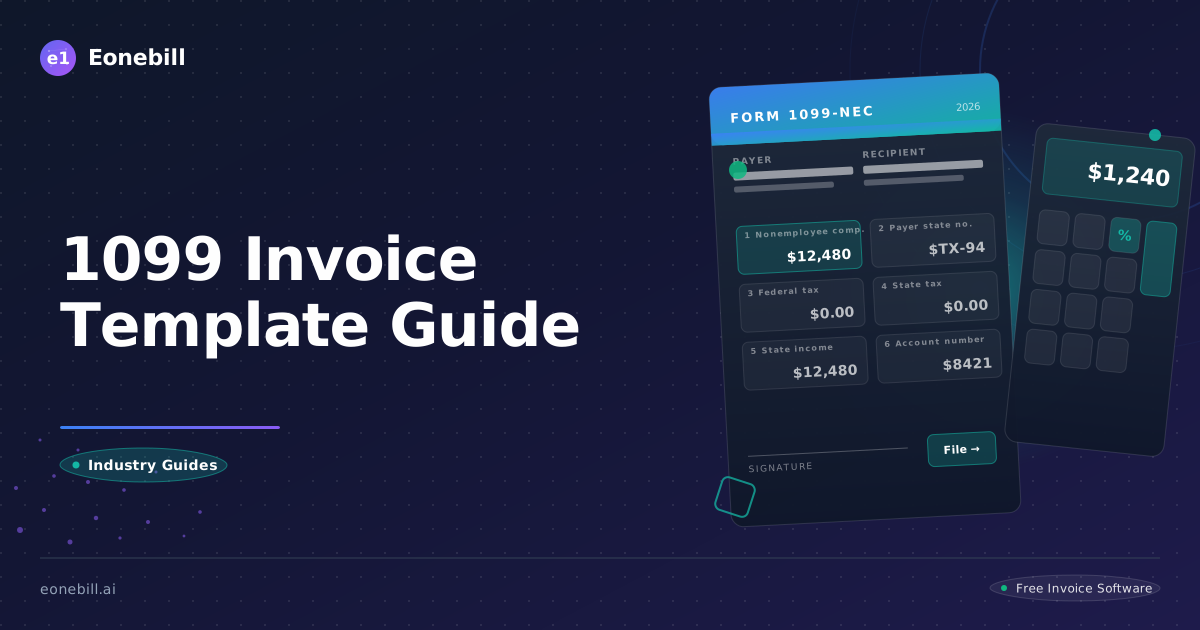
How to Create a 1099 Invoice: Template + Free Generator for Contractors
If you hire independent contractors—or if you're a contractor yourself—understanding 1099 invoices is essential for proper tax compliance. The IRS requires businesses to report payments of $600 or more to non-employees using Form 1099-NEC, and the invoice is where the paper trail starts.
This guide walks you through exactly what goes on a 1099 invoice, common mistakes to avoid, and how to generate professional 1099 invoices for free using Eonebill's built-in template.
What Is a 1099 Invoice?
A 1099 invoice is an invoice issued to an independent contractor that documents services rendered and payment terms. It's distinct from the actual 1099-NEC tax form (which the payer files with the IRS), but it serves as the business record that triggers the 1099 reporting requirement.
The IRS Instructions for Form 1099-NEC specify that any U.S. trade or business that pays $600 or more to an independent contractor must file this form. That means even small freelancers and solopreneurs need to issue proper invoices if they want their clients to meet their tax obligations.
What Must Appear on a 1099 Invoice?
A complete 1099 invoice includes:
- Your legal name and address — The name under which you file taxes
- Your Tax ID Number (EIN or SSN) — Required for the payer to issue a 1099-NEC
- Client's name and business address
- Invoice number and issue date
- Description of services — Specific enough to justify the payment
- Total amount due and payment terms
- Payment due date
Step-by-Step: How to Create a 1099 Invoice
Step 1: Gather Your Information
Before creating your invoice, confirm your legal business name, address, and Tax ID. If you're a sole proprietor using your SSN, that's fine—but using a separate EIN (free from the IRS) is better for privacy.
Step 2: Collect Client Details
You'll need your client's business name, address, and entity type (LLC, sole proprietorship, etc.). This information appears on the 1099-NEC your client's accountant will file.
Step 3: Describe Services Precisely
The IRS requires a clear description of services. "Consulting services" works, but "Six hours of UX audit and recommendations for mobile app redesign, March 2026" is better. Vague line items invite audit questions.
Step 4: Set Payment Terms
Standard is Net 30 (payment due within 30 days), but contractors often negotiate Net 15 or even Net 7. Be clear about late payment consequences—Eonebill's automated reminders handle follow-ups so you don't have to chase.
Step 5: Send and Track
Once created, send the invoice through your platform and track payment status. If unpaid by the due date, the IRS still expects the 1099-NEC from the payer—so timely payment matters for both parties.
Common 1099 Invoice Mistakes to Avoid
Using the wrong Tax ID: Sole proprietors sometimes accidentally provide their SSN when they have an EIN. Use the ID that matches how you file your taxes.
Incorrect payment thresholds: If you paid a contractor $550 total in 2025, no 1099 is required—but if you retroactively added a $200 late payment that pushes the total to $750, you may need to issue an amended 1099. Track running totals throughout the year.
Forgetting state requirements: Some states have additional 1099 filing requirements beyond the federal form. Check your state's Department of Revenue website for specifics.
Not keeping copies: Both parties should retain 1099 invoices for at least 7 years per IRS record-keeping guidelines.
Free 1099 Invoice Template Generator
Creating a compliant 1099 invoice from scratch in Word or Google Docs is doable—but error-prone. Eonebill's 1099 invoice template generator handles all the required fields, lets you customize with your branding, and stores a digital record of every invoice you send.
The free plan includes 6 invoices per month—enough for most freelancers starting out. Paid plans offer unlimited invoices plus automated reminders and tax-ready expense categorization.
Generate your free 1099 invoice template →
Conclusion
A proper 1099 invoice protects both the contractor and the hiring business. It creates the paper trail that triggers IRS reporting, ensures you're paid on time, and establishes a professional record of your business relationship. Use a generator like Eonebill to eliminate errors and focus on the work that actually earns you money.
Ready to manage invoices, contracts & proposals in one place? Try Eonebill free — no credit card required.
Start Free →Frequently Asked Questions
More Posts
Filing Taxes Late: Penalties, Extensions, and How to Catch Up (2026)
Missed the April deadline? Understand the 5 percent failure-to-file vs 0.5 percent failure-to-pay penalty difference, how Form 4868 extensions help, and the four-step protocol for catching up on years of unfiled returns.
Penalties for Not Filing a 1099: What Freelancers and Small Businesses Need to Know (2026)
Failing to file 1099 forms on time triggers escalating IRS penalties from 60 to 660 dollars per form. Learn the four-tier schedule, how to fix a missed filing, and when First-Time Penalty Abatement applies.

How to Write a Gentle Reminder Email (Templates + Examples)
Learn how to write a professional gentle reminder email that gets results. Includes 8 ready-to-use templates for invoices, meetings, deadlines, and more.
Newsletter
Join the community
Subscribe to our newsletter for the latest news and updates