Free Cash Receipt Template — Create a Cash Payment Receipt Online
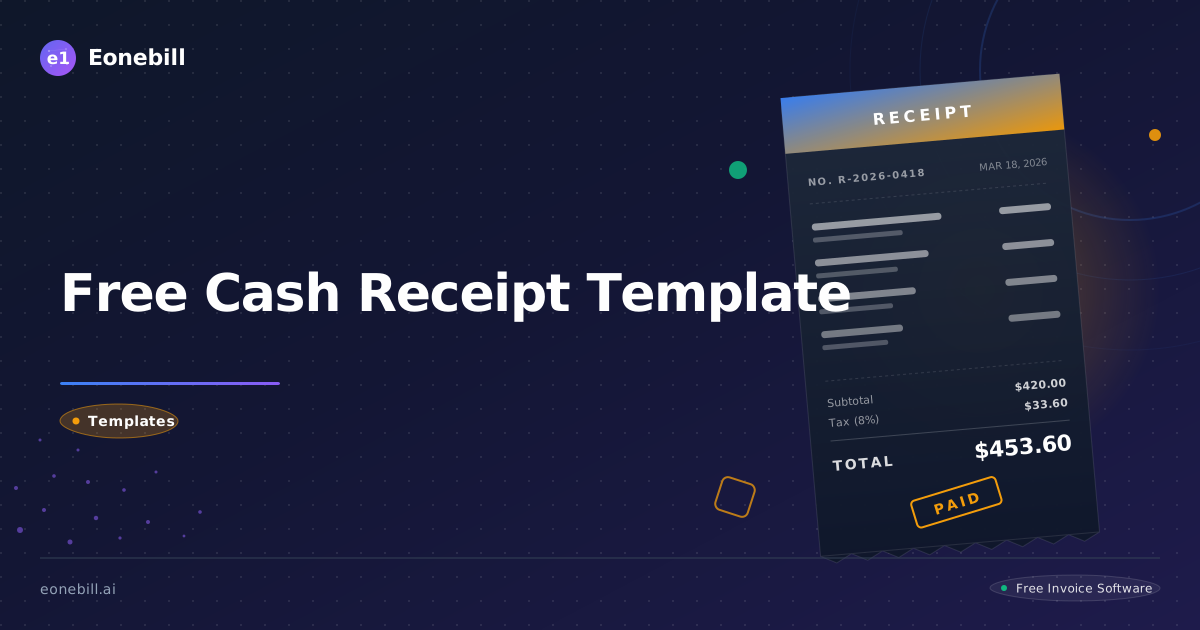
Free Cash Receipt Template — Create a Cash Payment Receipt Online
When money changes hands in cash, the only thing standing between you and a future dispute is a piece of paper — or a PDF. A cash receipt is a written document that proves a cash payment was made and received. Unlike a bank transfer or credit card charge, cash leaves no automatic digital record. That makes the receipt the only evidence that the transaction happened at all. Whether you are a freelancer paid in cash for a project, a small business owner selling goods at a local market, or a landlord collecting rent from a tenant, creating a cash receipt immediately after payment is one of the smartest habits you can develop. This guide walks you through everything you need to know about cash receipts — what they are, what they include, how to create one, and where to get a free template right now.
What Is a Cash Receipt?
A cash receipt is a formal written record confirming that a cash payment has been made by one party and received by another. It documents the essential details of the transaction: who paid, who received the money, how much was paid, what the payment was for, and when it occurred. In accounting terms, it is the source document that initiates a cash entry in your books. For most everyday transactions, it is simply your proof that the deal is done.
It is important to understand how a cash receipt differs from an invoice. An invoice is sent before payment — it is a request for money owed. A receipt is issued after payment — it is confirmation that money was received. Both documents are part of the same transaction lifecycle, but they serve opposite purposes. If you only have an invoice, you know money was requested; you do not know whether it was ever paid. If you have a cash receipt, you know the payment happened. For a deeper look at how receipts are defined in commercial contexts, visit the /glossary/receipt page on Eonebill.
Cash receipts are used across a wide range of everyday business and personal transactions. Freelancers who accept cash payments for design, photography, writing, or contracting work need them to document income. Small retailers selling at farmers markets, craft fairs, or pop-up shops use them in place of a point-of-sale system. Landlords collecting rent in cash are often legally required to issue them. Individuals selling personal property in private sales rely on them to close transactions cleanly. And nonprofits issuing receipts for cash donations need them to satisfy IRS documentation requirements for charitable giving.
Cash Receipt vs. Invoice: What's the Difference?
The distinction between a cash receipt and an invoice matters practically, not just theoretically. Mixing them up — or skipping one in favor of the other — can create real problems for your records and your relationships with clients.
An invoice is a billing document. You send it to a client before payment is due, or at the time you deliver services. It lists what was provided, the price, and the payment terms. The invoice says, in effect: "Here is what you owe and when you owe it." It does not prove that payment was ever made.
A cash receipt comes after the money has moved. It says: "I have received your payment." A freelancer who completes a $500 logo design project, sends an invoice, and collects cash from the client should then issue a cash receipt confirming the $500 was paid on a specific date. The invoice documents the obligation; the receipt closes it. Both documents belong in your records — and in your client's records. You can download Eonebill's ready-to-use template at /receipt-template/cash-receipt to make issuing receipts as simple as filling in a form.
In practice, many small business owners skip the receipt step because the payment feels informal. This is exactly the situation that leads to disputes months later. A client claims they paid; you have no record. Or you claim a client never paid; they insist they did. A signed cash receipt eliminates that ambiguity entirely.
What Information Goes on a Cash Receipt?
A well-constructed cash receipt is short but complete. Every field is there for a reason, and omitting even one can reduce the document's legal and practical value. Here are the eight pieces of information every cash receipt should include.
1. Receipt number. A unique sequential number for each receipt you issue. Numbering your receipts makes it easy to reference specific transactions in conversations and audits. If a client says "I have a question about receipt 0047," you can find it instantly. Numbered records also make it immediately obvious if a receipt is missing from your sequence.
2. Date of payment. The exact date the cash was received. This is not the invoice date, not the service date — it is the date the money was in your hands. The payment date is the single most important field for resolving any future timeline dispute.
3. Payer name. The full legal name of the person making the payment. For business-to-business transactions, use the company name. For individual transactions, use the person's full name. This ties the receipt to a specific party and prevents any confusion about who made the payment.
4. Recipient or business name. Your name or the name of your business. This should match whatever name you use on contracts, invoices, and tax filings for consistency. If you operate as an LLC or DBA, use that entity name.
5. Amount paid in numbers and words. Write the dollar amount numerically — for example, $325.00 — and also spell it out: "Three hundred twenty-five dollars and 00/100." Writing the amount in words is a standard practice borrowed from check writing. It eliminates any possibility that a digit was misread or altered.
6. Description of goods or services. A brief but specific description of what the payment was for. "Web design services, March 2026" or "Used dining table — private sale" or "Lawn care, April 15 visit." The more specific, the better. A vague description like "services" does not hold up well if the transaction is ever questioned.
7. Payment method. For a cash receipt, this will always say "Cash" — but it is still worth noting explicitly. In some cases, you may issue a receipt that covers a partial cash payment and a partial check payment. Documenting the method protects you from any claim that payment was made differently than you recorded.
8. Signature or stamp. The recipient's signature (or an official stamp if you use one) authenticates the receipt. Without a signature, the document is simply a printed form — anyone could have filled it in. Your signature turns it into an official acknowledgment.
How to Create a Cash Receipt: Step-by-Step Guide
Creating a professional cash receipt takes less than two minutes when you have the right tools. Here is how to do it correctly every time.
Step 1 — Choose a template or use the free generator. The fastest option is Eonebill's free receipt generator, which lets you fill in fields online and download a finished PDF immediately — no account needed. If you prefer a reusable template you can fill in offline, download the cash receipt template from /receipt-template/cash-receipt.
Step 2 — Fill in payer and recipient details. Enter the payer's full name and your own name or business name. Double-check spelling against any existing contracts or correspondence — inconsistency across documents can cause complications during audits.
Step 3 — Enter the amount paid in numbers and words. Type the dollar figure numerically and spell it out in full. If the amount is $750, write both "$750.00" and "Seven hundred fifty dollars and 00/100." This dual format removes all ambiguity.
Step 4 — Describe what was purchased or paid for. Be specific. "Freelance photography — corporate headshots, April 28, 2026" is a far stronger description than "photography services." The more detail you include, the more defensible the receipt is if it is ever questioned.
Step 5 — Sign and issue immediately. Sign the receipt the moment payment is in hand and give the payer their copy on the spot. Do not wait until later — delays invite questions about timing. One key practice: always issue two copies. One goes to the payer; one stays with you. This is standard in any well-run business operation and is especially important for cash transactions where no digital bank record exists.
Free Cash Receipt Template Download
Eonebill's free cash receipt template is designed to cover every field a valid receipt requires, with clean formatting that looks professional whether you print it or send it digitally. The template is available at /receipt-template/cash-receipt and is ready to use immediately — no design work or formatting required on your end.
The template includes pre-labeled fields for all eight required elements: receipt number, date, payer name, recipient name, amount (numbers and words), description, payment method, and signature line. You can customize the header with your business name, logo, and contact information to match your brand. Once you have filled in the fields, download the receipt as a PDF, print it, or email it directly.
If you prefer to create receipts entirely online — without downloading any files — use Eonebill's free receipt generator. Enter the details in the form, preview the receipt, and download or email it in seconds. The generator also supports duplicate copies so you can send one to the payer and retain one for your records in the same workflow. Both the template and the generator are available at no cost on Eonebill's free plan.
When Do You Need a Cash Receipt?
Cash receipts are useful in more situations than most people realize. Here are five common scenarios where issuing one is either legally required or strongly in your interest.
Freelancers paid in cash. Graphic designers, photographers, writers, musicians, and other freelancers occasionally accept cash for small projects or quick gigs. Every cash payment you receive is taxable income. A receipt documents the transaction for your own books and gives your client proof of payment — which they may need for their own expense records.
Small businesses and market vendors. Retailers selling at farmers markets, craft fairs, pop-up events, or in small storefronts often handle significant cash volume. Issuing numbered receipts for every transaction keeps your books clean and signals to customers that you run a legitimate, professional operation.
Landlords collecting rent in cash. As noted in state-specific tenant protection laws, several US states require landlords to issue a written receipt any time rent is paid in cash. Even in states without this requirement, failing to issue a receipt creates unnecessary risk of payment disputes. Issuing receipts for every cash rent payment is simply the professional standard.
Garage sales and private transactions. Selling a car, furniture, electronics, or other personal property to a private buyer involves cash more often than not. A signed cash receipt protects the seller from any future claim that the item was given away or that the price was different. It also protects the buyer from any future dispute about whether they actually paid.
Nonprofit and charitable organizations. Cash donations require written acknowledgment for donors to claim a charitable deduction on their taxes. The IRS requires a receipt for any cash donation for which the donor wants a deduction. Nonprofits that fail to issue proper receipts leave their donors without required documentation.
For most of these use cases, Eonebill's free plan is all you need. If you run a business with ongoing cash transactions and need to manage receipt history, automated numbering, or multi-user access, explore the Pro and Business tiers at /pricing.
Cash Receipt Best Practices
Following these five practices will keep your cash receipt records airtight and your business protected.
1. Always issue immediately. Issue the receipt the moment you receive the cash — not later that day, not the next morning. Immediate issuance removes any question about timing and shows the payer that you take the transaction seriously.
2. Keep numbered records. Start every new year with receipt number 0001 (or continue sequentially from where you left off). Numbered receipts make it easy to spot missing entries and simplify reconciliation at tax time.
3. Store digital copies. Even if you issue paper receipts, photograph or scan each one and store it digitally. Paper fades and is easily lost. A digital copy backed up to the cloud is retrievable for years without deterioration.
4. Include enough detail to identify the transaction. A receipt that says "$200 — services" is nearly useless in a dispute. A receipt that says "$200 — house cleaning, 4 hours, March 12, 2026, 123 Maple Street" is unambiguous. More detail is always better.
5. Issue two copies every time. One for the payer, one for your records. This is not optional for serious businesses. Both parties should leave every cash transaction with a signed copy of the receipt in their hands.
Frequently Asked Questions
What is a cash receipt?
A cash receipt is a document that confirms a cash payment has been received. It serves as proof of transaction for both the payer and the recipient, and is important for bookkeeping, tax records, and dispute resolution. Without a cash receipt, there is no independent evidence that a cash transaction ever took place.
What information goes on a cash receipt?
A cash receipt should include: a unique receipt number, the date of payment, the payer's name, your business name, the amount paid in numbers and words, a description of what was paid for, the payment method (cash), and a signature. All eight fields contribute to a receipt that is complete, clear, and defensible.
Is a cash receipt the same as an invoice?
No. An invoice is sent before payment to request money owed. A cash receipt is issued after payment is received to confirm the transaction. Think of the invoice as a bill and the receipt as proof you paid it. Both documents belong in the records of the payer and the recipient, but they represent different stages of the transaction.
How do I create a cash receipt for free?
Use Eonebill's free receipt generator at /free-tools/receipt-generator or download a ready-made cash receipt template at /receipt-template/cash-receipt. No signup is required for basic use. Fill in the fields, download your PDF, and you are done.
Are cash receipts legally required?
In most US states, cash receipts are not legally required for general transactions, but they are strongly recommended for your own protection. Some states require landlords to issue receipts for rent paid in cash. For tax purposes, keeping cash receipts is essential for tracking deductible business expenses and documenting taxable income. Even when not required by law, the habit of issuing and retaining cash receipts is one of the simplest and most effective ways to protect yourself from disputes.
Ready to manage invoices, contracts & proposals in one place? Try Eonebill free — no credit card required.
Start Free →Frequently Asked Questions
More Posts
Filing Taxes Late: Penalties, Extensions, and How to Catch Up (2026)
Missed the April deadline? Understand the 5 percent failure-to-file vs 0.5 percent failure-to-pay penalty difference, how Form 4868 extensions help, and the four-step protocol for catching up on years of unfiled returns.

Penalties for Not Filing a 1099: What Freelancers and Small Businesses Need to Know (2026)
Failing to file 1099 forms on time triggers escalating IRS penalties from 60 to 660 dollars per form. Learn the four-tier schedule, how to fix a missed filing, and when First-Time Penalty Abatement applies.

How to Write a Gentle Reminder Email (Templates + Examples)
Learn how to write a professional gentle reminder email that gets results. Includes 8 ready-to-use templates for invoices, meetings, deadlines, and more.
Newsletter
Join the community
Subscribe to our newsletter for the latest news and updates