Free Proposal Templates — AI-Powered Business Proposals 2026
Download free proposal templates for any industry. Freelance, consulting, marketing, design, IT, and construction proposals — all with AI generation in 20 seconds.
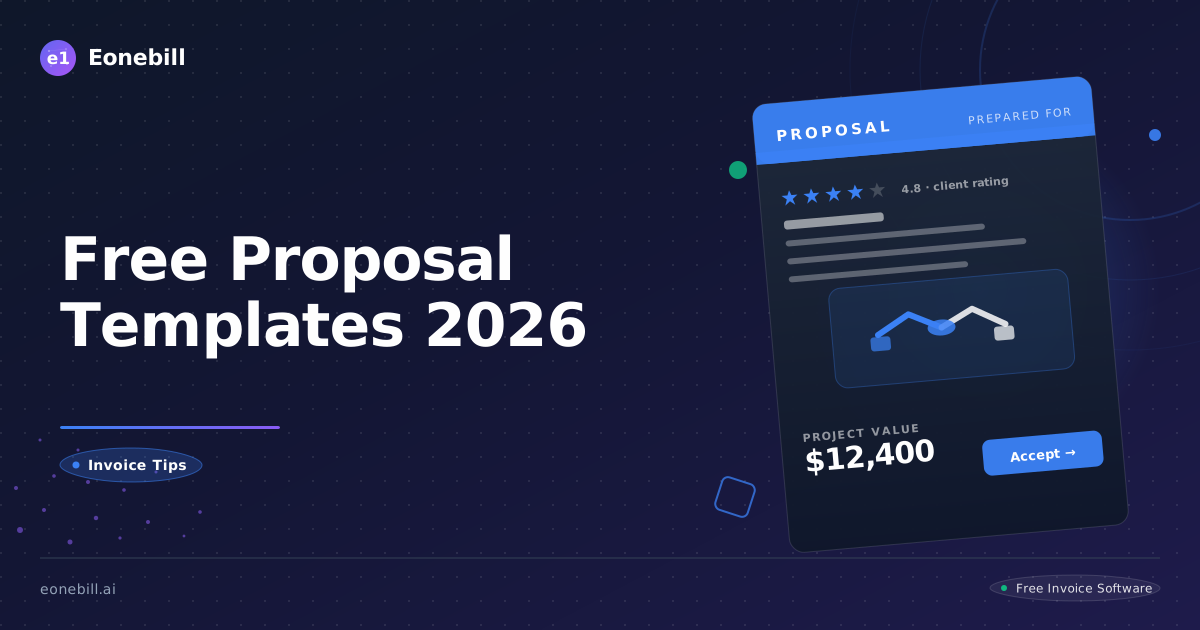
A business proposal isn't just a document — it's your first real impression with a prospective client. Get it right and you've opened the door. Get it wrong and you're ghosted before the call even happens.
The problem is that most freelancers and small businesses treat proposals as a chore — something to rush through after the real sales conversation already happened. They copy-paste a generic template, fill in the client's name, change the numbers, and hit send. Then they wonder why they lost the deal to someone who seemed to "get" the client better.
The difference between a winning proposal and a losing one is almost never price. It's specificity, clarity, and confidence.
This guide covers everything you need to write professional business proposals in 2026 — plus free templates for six major industries and an AI generator that creates complete proposals in 20 seconds.
TL;DR
- A winning proposal is specific to the client — not a generic fill-in-the-blank exercise
- Every proposal needs 8 core sections regardless of industry
- Industry-specific sections matter — what a construction client needs to see is different from a tech startup
- Eonebill's AI proposal generator creates complete, professional proposals from a plain-English brief in under 20 seconds
- Download free proposal templates for Freelance, Consulting, Marketing, Design, IT, and Construction
The 8 Core Sections Every Proposal Must Have
Before we get into industry specifics, here's the foundation. Every proposal — regardless of industry or client — needs these eight sections:
1. Executive Summary (1 Paragraph)
This is the 30-second version of your entire proposal. A decision-maker should be able to read just this section and understand the full scope of what you're proposing.
What it includes:
- The client's challenge or need (in their words or summarized)
- Your proposed solution
- The expected outcome
- The investment
Common mistake: Writing this as a description of what you do, not what the client gets. "We provide social media management services" is weak. "We'll increase your Instagram engagement by 40% over 90 days through a targeted content strategy and twice-weekly community management" is a proposal.
2. Problem Statement / Client Need
Describe the client's situation as you understand it. This shows you've been listening and signals that your solution is tailored, not off-the-shelf.
Tip: Reference specific things the client mentioned — in their original inquiry, in your discovery call, or on their website. Generic problem statements feel copied. Specific ones feel like you get them.
Example (weak): "You need help with your marketing."
Example (strong): "Your current Instagram account has 4,200 followers but averages only 1.2% engagement per post — below the 3% industry benchmark for your follower tier. This suggests your content strategy isn't driving meaningful audience interaction, which limits your ability to convert followers to customers."
3. Proposed Solution
This is the heart of your proposal. Describe exactly what you're going to deliver, how, and why your approach is the right one for this client.
Structure it as:
- What you're delivering (the output)
- How you'll deliver it (your process/methodology)
- Why your approach is the right fit for this specific client
Be specific about deliverables. "Social media management" isn't a deliverable. "30 posts per month across Instagram and LinkedIn, including original caption writing, hashtag research, and community engagement responses" is a deliverable.
4. Methodology / Process
Clients want to know not just what they're getting, but how the work actually happens. This section builds trust and sets expectations.
Include:
- The steps you'll take (from kickoff to delivery)
- What the client needs to provide at each stage
- How you'll communicate progress
- How revisions or changes are handled
5. Timeline and Milestones
A timeline grounds your proposal in reality and gives the client something to hold you accountable to. Break the project into phases with estimated completion dates.
Format:
| Phase | Deliverable | Estimated Completion |
|---|---|---|
| Phase 1: Discovery | Research brief, sitemap | Week 1–2 |
| Phase 2: Design | Wireframes, mockups | Week 3–4 |
| Phase 3: Development | Functional prototype | Week 5–7 |
| Phase 4: Launch | Final site, QA | Week 8 |
Important: Be honest about timelines. Under-promising and over-delivering is a reputation-builder. Over-promising and under-delivering is how you get bad reviews and no referrals.
6. Your Team and Credentials
This is your social proof section. Show the client why you're the right person (or team) for this work.
Include:
- Brief bios of key team members
- Relevant experience (especially similar projects)
- Case studies or examples of past work with measurable results
- Client testimonials (with permission)
- Relevant certifications or credentials
Tip: Lead with results, not credentials. "We have 10 years of experience" is less compelling than "We helped a SaaS startup in your space increase their trial-to-paid conversion rate by 34% over 6 months using the same approach we're proposing for you."
7. Investment and Pricing
This is where many proposals lose clients — either because pricing is missing, unclear, or presented without context.
Best practices:
- Be transparent about pricing. Vague or hidden pricing destroys trust.
- Show what's included — and what's explicitly excluded.
- Justify your pricing briefly ("This investment covers X hours of work, Y deliverables, and Z months of support").
- Offer options if appropriate (e.g., basic, standard, premium tiers).
Payment structure: Specify when payment is due — upfront, at milestones, or on completion. Most freelancers request 50% upfront for new clients.
8. Terms and Next Steps
Close the proposal with clear terms and a low-friction path to getting started.
Include:
- Validity period (e.g., "This proposal is valid for 30 days")
- What happens when they sign
- How to accept (e-signature, email confirmation, etc.)
- Any deposit or onboarding steps required
Industry-Specific Proposal Templates
Each industry has its own vocabulary, client priorities, and proposal conventions. Here's what to include and emphasize for each major category:
🎨 Freelance Proposal Template
Best for: Solo freelancers in any service industry — writers, designers, developers, photographers, virtual assistants, and other independent professionals.
Key sections for freelance proposals:
- Scope of work — Detailed breakdown of exactly what you're delivering
- Portfolio links — 2–3 relevant examples of past work
- Rates — Hourly rate or project flat fee, clearly stated
- Timeline — Realistic delivery dates based on your current availability
- Revisions policy — How many rounds of revisions are included (e.g., "2 rounds of revisions included, additional revisions billed at $X/hour")
- Communication expectations — Response time, meeting availability, preferred tools
- Kill fee / cancellation terms — What happens if the project is cancelled mid-way
Sample freelance proposal structure:
- Executive Summary
- Understanding Your Needs
- Proposed Solution & Scope of Work
- Process & Timeline
- Portfolio & Past Work
- Investment
- Terms & Conditions
- Accept & Get Started
Generate this proposal with AI →
💼 Consulting Proposal Template
Best for: Business consultants, management advisors, financial consultants, HR consultants, strategy consultants, and professional advisory firms.
Key sections for consulting proposals:
- Problem diagnosis — Your analysis of the client's current challenges (this is your credibility moment)
- Engagement scope — How involved you'll be (advisory calls, ongoing retainer, project-based)
- Analytical framework — The methodology you'll use to approach their problem (McKinsey-style, data-driven, etc.)
- Deliverables — What they'll receive (reports, presentations, recommendations, implementation plans)
- Client involvement — What you need from them (data access, stakeholder interviews, decision-making)
- Engagement terms — Retainer vs. project fee, payment terms, NDA requirements
- Confidentiality — How you handle proprietary information
Sample consulting proposal structure:
- Executive Summary
- Our Understanding of Your Challenges
- Proposed Approach & Methodology
- Scope of Engagement
- Deliverables
- Timeline
- Investment
- Team & Relevant Experience
- Client References
- Terms, Confidentiality & Next Steps
Generate this proposal with AI →
📣 Marketing Proposal Template
Best for: Marketing agencies, social media managers, SEO specialists, content marketers, paid ad managers, email marketers, and PR professionals.
Key sections for marketing proposals:
- Marketing audit / situation analysis — Brief assessment of their current marketing state
- Target audience — Who you're marketing to and why
- Competitive landscape — Who they're competing against and how you'll differentiate
- Strategy overview — The big picture approach (content-led, paid-first, SEO-driven, etc.)
- Channel-specific tactics — What you'll actually do on each platform/channels
- KPIs and success metrics — How you'll measure results (traffic, leads, conversions, revenue)
- Reporting cadence — How often you'll share results
- Budget allocation — How spend is divided across channels (if managing paid ads)
Sample marketing proposal structure:
- Executive Summary
- Current Marketing Assessment
- Target Audience & Market Positioning
- Marketing Strategy
- Channel-by-Channel Execution Plan
- Key Performance Indicators
- Reporting Schedule
- Investment & Pricing Tiers
- Terms & Conditions
- Get Started
Generate this proposal with AI →
🖌️ Design Proposal Template
Best for: Graphic designers, UX/UI designers, brand designers, web designers, product designers, and design studios.
Key sections for design proposals:
- Design brief recap — Confirm your understanding of what they need
- Design concept direction — Initial thoughts on creative approach (before you've done the work)
- Deliverables清单 — Every file/asset you'll deliver (logos, brand guidelines, source files, etc.)
- File formats — What formats they'll receive (PNG, SVG, PDF, etc.)
- Usage rights / licensing — Who owns the work after delivery, what they can use it for
- Revision rounds — How many design rounds are included
- Technical specs — If relevant (responsive breakpoints, print specifications, etc.)
- Development handoff — If applicable (how you'll hand off to developers)
Sample design proposal structure:
- Executive Summary
- Understanding Your Brand Needs
- Proposed Design Direction
- Scope of Work & Deliverables
- Process & Timeline
- File Formats & Technical Specifications
- Usage Rights & Licensing
- Portfolio
- Investment
- Terms & Conditions
- Let's Create Something Great
Generate this proposal with AI →
💻 IT / Technology Proposal Template
Best for: Software developers, web developers, IT consultants, DevOps engineers, cloud architects, cybersecurity consultants, and tech solution providers.
Key sections for IT proposals:
- Technical requirements — Current state vs. desired state
- Solution architecture — Technical approach, platforms, tools, infrastructure
- Development phases — Waterfall, agile sprints, or milestone-based
- Technical specifications — Stack, integrations, security standards, compliance requirements
- QA and testing approach — How you'll ensure quality and catch bugs
- Hosting and maintenance — Who hosts post-launch, ongoing maintenance terms
- Support terms — Bug fixes, security updates, feature additions (included vs. extra)
- IP and code ownership — Who owns the codebase after delivery
- Integration requirements — Third-party services, APIs, data migration
Sample IT proposal structure:
- Executive Summary
- Technical Requirements & Current State
- Proposed Solution Architecture
- Development Methodology
- Project Phases & Milestones
- Quality Assurance & Testing
- Security & Compliance
- Hosting, Maintenance & Support
- Team & Technical Credentials
- Investment & Pricing
- Terms & Conditions
- Begin Development
Generate this proposal with AI →
🏗️ Construction Proposal Template
Best for: General contractors, specialty trade contractors, construction managers, renovation companies, and trade professionals (electricians, plumbers, HVAC, etc.).
Key sections for construction proposals:
- Scope of work — Detailed description of all construction activities
- Materials specifications — Brands, grades, quantities (referenced to plans/specs)
- Labor estimate — Hours and rates by trade
- Permit and inspection responsibilities — Who's pulling permits, scheduling inspections
- Site access and conditions — What the client needs to provide (access, utilities, existing conditions)
- Change order process — How scope changes are handled and priced
- Insurance and licensing — Your contractor's license, liability insurance, workers' comp
- Warranty terms — Labor and materials warranties
- Progress billing schedule — How payments are tied to project milestones
- Completion date — Estimated finish date with conditions that could affect it
Sample construction proposal structure:
- Executive Summary
- Project Scope of Work
- Materials & Specifications
- Labor Estimate
- Permit & Inspection Plan
- Site Requirements
- Project Timeline & Milestones
- Progress Billing Schedule
- Insurance, Licensing & Bonding
- Warranty Information
- Terms & Conditions
- Acceptance & Signature
Generate this proposal with AI →
How to Write a Proposal That Actually Wins
The templates above give you the structure. Here's the strategy that turns a well-formatted document into a deal-winning proposal.
Do Your Homework Before You Write
The best proposals feel like they were written specifically for this client — because they were. Before you open the template:
- Read their website, especially their About and Services pages
- Follow them on social media for 2–3 weeks before sending the proposal
- Talk to anyone who's worked with them before (ask for references)
- Note their current challenges, stated goals, and company culture
Open With Their Problem, Not Your Solution
Clients hire you to solve their problems, not to implement your preferred methodology. Lead with empathy and understanding before you pitch your solution.
Weak opening: "We'd love to help you with your social media marketing."
Strong opening: "You've mentioned that your sales team is losing deals at the proposal stage — the proposal review process takes an average of 3 weeks, and your close rate on enterprise deals has dropped 18% over the past two quarters. Our proposal acceleration methodology has helped similar SaaS companies cut their proposal review time to under 5 days."
Use Numbers Everywhere
Vague promises don't close deals. Specific, measurable outcomes do.
- "We'll improve your website" → "We'll increase your organic search traffic by 45% over 6 months."
- "We'll manage your social media" → "We'll publish 24 posts/month and grow your following by 200 engaged new followers/month."
- "We'll reduce your IT costs" → "We'll reduce your monthly IT spend by 30% through cloud migration and automation."
Make the Call to Action Obvious and Low-Friction
Every proposal needs exactly one primary call to action. Don't bury it. Don't give them five options.
Weak: "If you're interested, feel free to reach out. We can also schedule a call if you'd like to discuss further."
Strong: "To accept this proposal, simply click the button below. We'll send a contract and kickoff questionnaire within 24 hours. You can also book a 15-minute intro call if you have any questions before signing."
Follow Up — Every Time
The data on proposal follow-up is consistent: most clients don't respond to the first email. Follow up at:
- Day 3: "Just checking in — wanted to make sure this reached you."
- Day 7: "Following up on my proposal from [date]. Happy to answer any questions or schedule a quick call."
- Day 14: "I haven't heard back, so I'm going to assume this isn't the right timing. I'll close this proposal for now, but I'm here if things change."
The third follow-up is crucial — it often triggers a response, either because they forgot or because they appreciate the professionalism.
AI Proposal Generator: Write a Proposal in 20 Seconds
Here's the reality: if you're sending more than two proposals a month, writing each one from scratch is eating into your actual billable time. And if you're using a generic template and just swapping names and numbers, it's showing.
Eonebill's AI proposal generator solves both problems. You describe what you need in plain English:
> "Proposal for Acme Corp to redesign their e-commerce website. They have 50,000 monthly visitors but only 1.2% conversion. We propose a full UX redesign over 8 weeks for $18,500, including UX research, UI design, and development handoff. 50% upfront, 50% on completion. Due in 30 days."
The AI generates the complete, formatted proposal — every section, your branding, the pricing breakdown, terms, everything. Ready to send in under 20 seconds.
Your saved client profiles mean repeat proposals take even less time. And unlike generic templates, every AI-generated proposal is specific to that client and project.
Try Eonebill free — unlimited proposals on all paid plans, 2/month on the free plan. Generate your first AI proposal →
Proposal Template Download
Get started with professionally designed proposal templates. Each template is customizable for your business and includes all the sections outlined above.
Available Templates by Industry
| Industry | Best For | Download |
|---|---|---|
| Freelance | Writers, designers, developers, photographers, VAs | Download .DOCX |
| Consulting | Business, management, financial, HR consultants | Download .DOCX |
| Marketing | Agencies, social media, SEO, content, paid ads | Download .DOCX |
| Design | Graphic, UX/UI, brand, web, product designers | Download .DOCX |
| IT / Tech | Developers, IT consultants, DevOps, cloud architects | Download .DOCX |
| Construction | GCs, trade contractors, renovation companies | Download .DOCX |
All templates are in Microsoft Word format (.DOCX) and work in Word, Google Docs, and LibreOffice.
Proposal Templates vs. AI Generation: Which Is Right for You?
| | Template | AI Generator |
|---|---|---|
| Best for | First-time proposal writers, simple projects | Regular proposal senders, complex projects |
| Time per proposal | 30–60 minutes to fill in and customize | Under 20 seconds to generate |
| Customization | Full manual control | AI-assisted with instant formatting |
| Industry-specific | One template per industry | Tailored to your specific client and project |
| Pricing | Free | Free plan: 2/month, paid plans: unlimited |
| Client management | Manual | Auto-saved client profiles |
Common Proposal Mistakes to Avoid
Mistake #1: Sending the same proposal to every client
Clients can tell when a proposal wasn't written for them. Generic proposals lose deals to someone who took the time to research and personalize.
Mistake #2: Forgetting to scope exclusions
"What happens if we need to add more pages?" or "What if we need to extend the timeline?" These questions kill momentum. Specify what's included and what's explicitly excluded.
Mistake #3: Vague timelines
"Something in Q2" isn't a timeline. Specific dates with milestones build trust and accountability.
Mistake #4: Hiding pricing until the end
Surprise pricing at the end of a proposal feels like a bait-and-switch. State pricing early in the proposal and justify it clearly.
Mistake #5: No clear call to action
If you don't tell the client exactly what to do next, they won't do anything. Close with a single, specific, low-friction action.
Mistake #6: Skipping social proof
Especially for new clients who've never worked with you, case studies and testimonials are essential. They answer the unasked question: "Can this person actually do what they're promising?"
Related Resources
Ready to manage invoices, contracts & proposals in one place? Try Eonebill free — no credit card required.
Start Free →Frequently Asked Questions
More Posts
Filing Taxes Late: Penalties, Extensions, and How to Catch Up (2026)
Missed the April deadline? Understand the 5 percent failure-to-file vs 0.5 percent failure-to-pay penalty difference, how Form 4868 extensions help, and the four-step protocol for catching up on years of unfiled returns.
Penalties for Not Filing a 1099: What Freelancers and Small Businesses Need to Know (2026)
Failing to file 1099 forms on time triggers escalating IRS penalties from 60 to 660 dollars per form. Learn the four-tier schedule, how to fix a missed filing, and when First-Time Penalty Abatement applies.
How to Write a Gentle Reminder Email (Templates + Examples)
Learn how to write a professional gentle reminder email that gets results. Includes 8 ready-to-use templates for invoices, meetings, deadlines, and more.
Newsletter
Join the community
Subscribe to our newsletter for the latest news and updates
Ready to streamline your freelance workflow?