Net 60 Payment Terms: What They Mean and When to Use Them
Net 60 payment terms give clients 60 days to pay invoices. Learn exactly what Net 60 means, when it's appropriate, pros and cons, and how to add it to your invoices using Eonebill.
Net 60 Payment Terms: What They Mean and When to Use Them
If you've ever received an invoice with "Net 60" printed on it and wondered how long you actually have to pay — you're not alone. Payment terms like Net 60 are a standard part of business invoicing, but they're not always well understood.
For freelancers and small business owners, choosing the right payment terms is a critical cash flow decision. Give clients too little time and you risk losing the contract. Give them too much time and you may find yourself waiting two months for payment you need today.
Here's everything you need to know about Net 60 — what it means, when to use it, and how to manage it without hurting your business.
What Does Net 60 Mean?
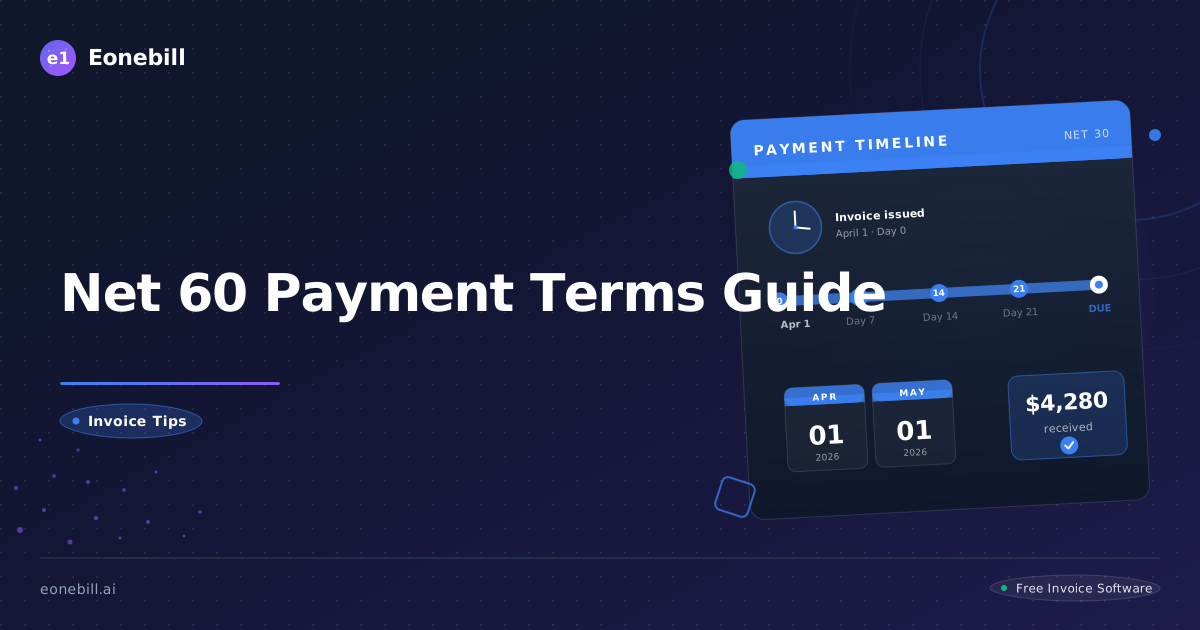
Net 60 means the full payment is due within 60 calendar days from the date the invoice is issued.
The "Net" refers to the net amount owed — the total after all discounts, adjustments, and taxes. The number (in this case, 60) tells the client how many days they have to pay that net amount in full.
Example:
You issue an invoice on March 1, 2026. With Net 60 terms, the payment is officially due on April 30, 2026 (60 days later). On May 1, the invoice is overdue.
It's that straightforward — but the implications for your cash flow are significant.
According to IRS record-keeping guidelines, businesses should maintain clear records of when invoices are issued and when payments are received. Net 60 terms make this timing explicit and legally binding when included on an invoice.
When to Use Net 60 Payment Terms
Net 60 is not the right choice for every transaction. Here's when it makes sense:
Use Net 60 when:
- Your client has a lengthy internal approval process — Large corporations and government agencies often require multiple levels of sign-off, making Net 30 impractical
- You're working on long-term projects — If a project spans several months, Net 60 milestones may align with the work phases
- Your client is a large, established company — Big companies with sophisticated AP (accounts payable) departments often standardise on Net 60
- Government contracts — Many federal and state government agencies operate on Net 60 or even Net 90 terms by default
- The relationship is strong and established — If you've worked with a client for years and trust their payment history, Net 60 can be a relationship-building gesture
Avoid Net 60 when:
- You're a freelancer depending on regular cash flow — Waiting 60 days for payment can create serious cash crunches
- The client relationship is new — You don't yet know if they'll pay reliably
- The transaction is small — Smaller amounts are typically expected to be paid faster
- Your own expenses are time-sensitive — If you have bills due before 60 days, Net 60 may not work for your business
Net 60 vs. Net 30: Side-by-Side Comparison
| | Net 30 | Net 60 |
|---|---|---|
| Payment window | 30 days | 60 days |
| Standard use | Most B2B transactions | Large corporations, government |
| Typical clients | Small businesses, startups | Large enterprises, agencies |
| Cash flow impact | Moderate | Significant |
| Risk level | Lower | Higher (longer wait = more risk) |
| Common discount | 2/10 Net 30 | 2/10 Net 60 |
| Industry norm? | Very common | Common for enterprise/government |
The SBA notes that consistent, clearly communicated payment terms are one of the most important factors in maintaining healthy business relationships and cash flow.
How to Add Net 60 to Your Invoice
Adding Net 60 terms to your invoice takes seconds with Eonebill — and it's one of the most important things you can do to set clear expectations with clients.
Here's how to set it up:
Step 1: Create a new invoice in Eonebill
Step 2: Select or create your client
Step 3: Add your line items (services, products, rates)
Step 4: In the payment terms field, select "Net 60" from the dropdown
Step 5: Eonebill automatically calculates and displays the due date based on the invoice date
Eonebill also lets you add a note like: "Payment is due within 60 days of the invoice date. Please include the invoice number with your payment." This simple addition dramatically improves the likelihood of on-time payment.
Create your first invoice with Net 60 terms →
Want to compare all payment term options? See our full payment terms glossary and learn how Net 30 works. For your invoicing tool, check out Eonebill pricing.
Want to understand all the payment term options? See our complete guide to payment terms and Net 30 as well.
Tips for Managing Net 60 Invoices
1. Send invoices immediately
Don't wait until the end of the week or month to send invoices. Every day you delay is an extra day before the 60-day clock starts.
2. Track invoice status obsessively
Use a tool like Eonebill to monitor when each invoice was sent, when it's due, and when it's overdue. Don't wait for clients to tell you they're having trouble.
3. Send a reminder before the due date
A polite reminder 5–7 days before the due date ("Just a friendly reminder that Invoice #123 is due on April 30") keeps you top of mind without being aggressive.
4. Consider early payment discounts
Offering 2/10 Net 60 (2% off if paid within 10 days) gives cash-conscious clients an incentive to pay early — and improves your cash flow.
5. Don't start new work on overdue Net 60 invoices
If a client has a Net 60 invoice that is 60+ days overdue, pause any new work until the outstanding balance is resolved. This protects you from accumulating unpaid work.
Key Takeaways
- Net 60 means payment is due within 60 calendar days of the invoice date — it is clearly stated on the invoice and creates explicit payment expectations
- Net 60 is best suited for B2B relationships with established clients, large corporations, and government contracts — not typically ideal for freelancers with cash flow needs
- Compare with Net 30: Net 30 is the standard B2B term; Net 60 is for clients with longer internal approval workflows
- Add Net 60 terms to every invoice to create a legally clear payment obligation — use Eonebill to set and track terms automatically
- Offer early payment discounts (like 2/10 Net 60) to incentivize faster payment when needed
- Track every invoice's status and send reminders before the due date to prevent overdue payments
- Try Eonebill free to create invoices with Net 60 terms and automated payment tracking
Ready to manage invoices, contracts & proposals in one place? Try Eonebill free — no credit card required.
Start Free →Frequently Asked Questions
More Posts
Filing Taxes Late: Penalties, Extensions, and How to Catch Up (2026)
Missed the April deadline? Understand the 5 percent failure-to-file vs 0.5 percent failure-to-pay penalty difference, how Form 4868 extensions help, and the four-step protocol for catching up on years of unfiled returns.
Penalties for Not Filing a 1099: What Freelancers and Small Businesses Need to Know (2026)
Failing to file 1099 forms on time triggers escalating IRS penalties from 60 to 660 dollars per form. Learn the four-tier schedule, how to fix a missed filing, and when First-Time Penalty Abatement applies.

How to Write a Gentle Reminder Email (Templates + Examples)
Learn how to write a professional gentle reminder email that gets results. Includes 8 ready-to-use templates for invoices, meetings, deadlines, and more.
Newsletter
Join the community
Subscribe to our newsletter for the latest news and updates