Invoice Overdue 30 Days — What to Do Now
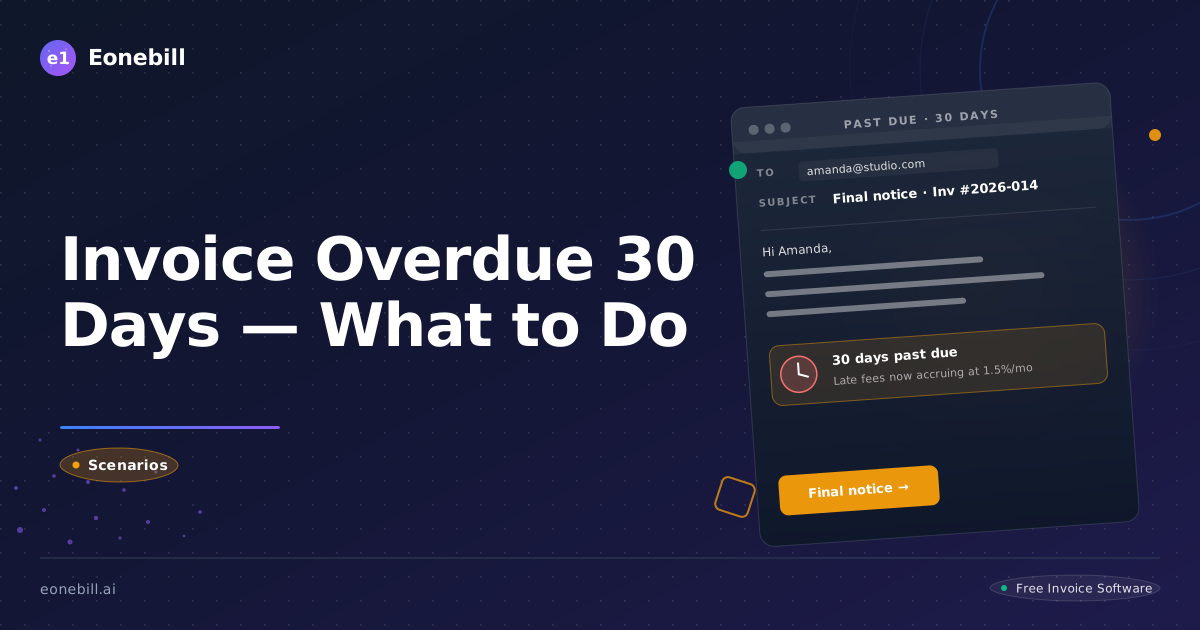
Invoice Overdue 30 Days — What to Do Now
An invoice that is 30 days past due is not lost yet, but the clock is ticking. The longer an invoice ages, the lower the collection probability. Industry data shows that an invoice paid within 30 days has a 95 percent collection rate, while invoices that hit 90 days drop to around 70 percent, and invoices past six months collect at well under 50 percent.
Thirty days past due is the right moment to act with calm professionalism, follow a structured escalation path, and bring the conversation to a clear resolution. This guide walks you through the steps that work without burning the relationship.
First Step — Confirm the Facts Before You Act
Before you send a single message, verify the basics. Pull up the invoice and confirm the issue date, the original due date, and the actual age of the past-due balance. Make sure the invoice was sent to the correct email address and the correct billing contact. A surprising percentage of late invoices were never received because they went to the wrong inbox or the contact left the company.
Check your payment platform and bank account for any partial payments or recent activity. Sometimes a client paid on a different invoice number by mistake, or the payment is sitting in a pending state. Check your spam folder for replies you might have missed. A polite client may have written back to ask a question that landed in junk.
Review the contract or written agreement to confirm the payment terms. If the agreement says Net 45 and you invoiced Net 30, the invoice is not actually 30 days past due. Walk into the conversation with accurate facts.
Finally, look at the broader client relationship. Is this their first late payment or part of a pattern? Did they recently flag financial difficulty, change leadership, or go through layoffs? Context shapes the escalation.
With the facts confirmed, you are ready to act.
Send a Professional Reminder Email
Day 30 is the right moment for a firm but polite reminder. Keep the tone professional and assume the best. Most late invoices are accidental, not malicious.
A strong day-30 reminder includes a clear subject line such as Past Due Invoice 2026-0157 - Please Confirm Payment Status, a brief greeting, the invoice number and amount, the original due date, and a request for a specific response. Ask the client to either confirm a payment date, share when the invoice will be processed, or flag any issue that needs your attention.
Attach a fresh copy of the invoice as a PDF, not just a link. A surprising number of payment delays happen because the original email was filed away and the client cannot find the invoice when they go to process it. Including the PDF removes that friction.
Mention the late fee if your contract included one. Be specific. State the percentage, when it begins to accrue, and the current additional balance if any. Do not threaten or apologize. Simply state the facts.
End with a phone number and an offer to discuss any concerns. Many overdue invoices have a quiet issue behind them that the client did not raise. Offering an easy conversation often surfaces the real problem.
Send the email during business hours, preferably mid-morning Tuesday through Thursday. Avoid Mondays and Fridays when inboxes are overflowing.
Pick Up the Phone
If there is no response to the email within three business days, call the client. The phone call is the single highest-conversion follow-up step at the 30-day mark. Email is easy to ignore. A phone call is much harder to dodge.
Prepare for the call. Have the invoice details, the contract terms, and the past-due timeline in front of you. Write down two or three open-ended questions in advance such as: Can you walk me through where the invoice is in your approval process? Is there anything I can help clarify or correct? When can I expect payment to be processed?
Start the call by introducing yourself, confirming you are speaking with the right person, and stating the purpose calmly. Use language like I am following up on invoice 2026-0157 which was due on February 20 and is now past due. I wanted to check in and make sure everything is in order on your end.
Listen carefully to the response. If the client says they did not receive the invoice, resend it immediately while still on the phone. If the approval process is slow, ask for the name of the next decision-maker. If there is a dispute, ask for the specific concern in writing within 48 hours. If the client says they cannot pay, ask why and explore a payment plan.
End every call by confirming next steps in writing. Send a follow-up email within the hour summarizing the conversation, the agreed payment date or payment plan, and any open items.
Offer a Payment Plan When Cash Flow Is the Issue
Many 30-day overdue invoices stay overdue because the client genuinely cannot pay the full amount right now. A payment plan is often the fastest path to recovery.
When offering a plan, be flexible on the schedule but firm on the documentation. A simple plan might be 50 percent immediately and the remaining 50 percent in 30 days, or four equal weekly payments. The right structure depends on the size of the invoice and the client's stated capacity.
Put the plan in writing. A short payment plan agreement signed by both parties is enough. Include the original invoice amount, any accrued late fees, the payment schedule with specific dates and amounts, the consequence of missing a payment, and both signatures. Email exchange counts as signature in most jurisdictions, but signed PDFs are stronger.
If your invoicing platform supports it, set up automatic recurring payments so the client does not have to remember each installment. Eonebill.ai supports scheduled partial payments tied to the original invoice, which keeps the accounting clean.
Never forgive late fees as part of the initial conversation. If the client asks for a waiver, you can consider it after the plan is signed and the first payment clears. Waiving fees before the client has shown commitment is a sign of weakness and often invites further delay.
Final Demand and Escalation Options
If two weeks pass after the reminder, the phone call, and the payment plan offer with no progress, you are at 45 to 60 days past due and it is time for a final demand letter.
A final demand letter is a formal written notice stating the amount owed, the original due date, the late fees accrued, the steps you have taken to collect, and the consequences of further delay. Make the consequences specific. Consequences typically include reporting to a collections agency, filing a small claims court action, or referring the matter to a collections attorney.
Send the letter by both email and US certified mail with return receipt. The paper trail matters if the case ends up in court. Give the client 10 business days to respond.
If the demand letter produces no result, your options depend on the amount.
For balances under your state's small claims limit, usually $5,000 to $10,000, small claims court is fast and inexpensive. Filing fees run $30 to $100. You represent yourself. The process from filing to judgment is typically 60 to 120 days. Bring your invoice, contract, communication log, and proof of delivery. Small claims judges are practical and respond well to organized evidence.
For balances above the small claims limit, hire a collections attorney or a reputable collections agency. Attorneys typically work on contingency at 25 to 40 percent of the recovery. Agencies charge 10 to 50 percent depending on the age and complexity of the debt. Compare options and check references.
For commercial clients who paid by ACH or card, you may have remedy through your payment processor. Some contracts also allow you to file a mechanic's lien or UCC filing, which can be powerful collection tools.
Whichever path you choose, document every step. Courts and collection professionals respond to the strength of your records.
Preventing the Next 30-Day Overdue Invoice
The best response to a 30-day past due invoice is to stop the next one from happening. Six habits, applied consistently, eliminate most chronic late payments.
First, send invoices the same day work is delivered. Same-day invoicing shortens the payment cycle by an average of 20 days. Second, automate payment reminders at day minus 3, day 0, day plus 3, day plus 10, and day plus 20. Eonebill.ai does this automatically with no manual intervention. Third, accept multiple payment methods including ACH, card, and digital wallets so the client picks the easiest option for them. Fourth, require deposits or upfront payment from new clients until they prove reliable. Fifth, charge a late fee and enforce it consistently. Sixth, fire chronic late payers and replace them with better clients.
Use the invoice generator at /free-tools/invoice-generator to build a template with built-in late fee language and clear payment instructions. Review your overdue invoice list weekly so problems surface early. Compare plan options at /pricing and pick the tier that includes the automation features your business needs.
Thirty days late is recoverable. Sixty days is harder. Ninety days is much harder. Act at day 30, follow the structured escalation, and most of your overdue invoices will close before the situation gets worse.
A pattern worth recognising is that 80 percent of late payments come from 20 percent of clients. The same names appear again and again in your overdue aging report. Identifying these chronic late payers and adjusting your terms with them is one of the highest-leverage moves you can make. Move them to upfront deposits, shorter terms, automatic recurring payments, or simply replace them with better clients. The energy you spend chasing chronic late payers is energy you cannot spend serving good clients or finding new ones. Most freelancers and small business owners hold on to bad clients far longer than they should because the relationship feels established and the work is steady. The hidden cost of that loyalty is enormous.
It is also worth noting that the most common reason an invoice goes past day 30 is not malice but inertia. The invoice was received, intended to be processed, and then deprioritised by something more urgent. Each day that passes without payment makes it slightly easier for the client to keep deprioritising. The structured escalation is partly designed to inject just enough friction back into the situation that paying you becomes easier than continuing to defer. A polite reminder followed by a phone call followed by a written notice creates a sense of forward motion that makes the path of least resistance to be payment rather than further delay.
For business owners who hate confrontation, the structured approach is a gift. Each step is a clearly defined action with a script. You are not improvising a difficult conversation. You are executing a process that thousands of businesses use successfully every day. The tone stays professional throughout, the steps escalate predictably, and the legal options at the end are well-understood. By treating overdue collection as a process rather than a personal conflict, you protect both the relationship and your cash flow.
It also helps to understand client cash flow from their perspective. Many late payments come from clients who themselves are waiting on payments from their own clients. A small business waiting 60 days for a corporate customer to pay cannot pay you in 30 days. Understanding this chain can shape your response. Offering a payment plan, accepting a partial payment, or simply being patient for a client who has been reliable in the past costs you little and often produces full collection within an additional month or two. Pushing aggressively on a client who is themselves under cash flow pressure can damage the relationship without speeding up payment.
That said, sympathy has limits. A client who has been consistently late for six months despite multiple conversations is not a client with temporary cash flow issues. They are a client whose operating model relies on late payment to suppliers. Those clients should be repriced, reterminated, or replaced. The hardest discipline for many small business owners is distinguishing between temporary cash flow stress that deserves accommodation and permanent late-payment behaviour that should be addressed. The signal is often consistency. Clients with temporary issues will communicate, propose a path forward, and follow through. Clients with permanent issues will avoid communication, miss every promised date, and present new excuses each time.
For freelancers and small businesses with low concentration of clients, late payment is a manageable annoyance. For those with high concentration where one or two clients represent most of revenue, late payment by a major client can be existential. Diversify your client base to reduce dependency risk. A business where no single client represents more than 20 percent of revenue can absorb a difficult collection situation without crisis. A business where one client represents 60 percent of revenue is essentially employed by that client and cannot easily push back on their payment behaviour. Concentration risk is one of the most common but underappreciated risks in service businesses, and the antidote is steady investment in business development to broaden the client base.
Ready to manage invoices, contracts & proposals in one place? Try Eonebill free — no credit card required.
Start Free →Frequently Asked Questions
More Posts
Filing Taxes Late: Penalties, Extensions, and How to Catch Up (2026)
Missed the April deadline? Understand the 5 percent failure-to-file vs 0.5 percent failure-to-pay penalty difference, how Form 4868 extensions help, and the four-step protocol for catching up on years of unfiled returns.
Penalties for Not Filing a 1099: What Freelancers and Small Businesses Need to Know (2026)
Failing to file 1099 forms on time triggers escalating IRS penalties from 60 to 660 dollars per form. Learn the four-tier schedule, how to fix a missed filing, and when First-Time Penalty Abatement applies.

How to Write a Gentle Reminder Email (Templates + Examples)
Learn how to write a professional gentle reminder email that gets results. Includes 8 ready-to-use templates for invoices, meetings, deadlines, and more.
Newsletter
Join the community
Subscribe to our newsletter for the latest news and updates