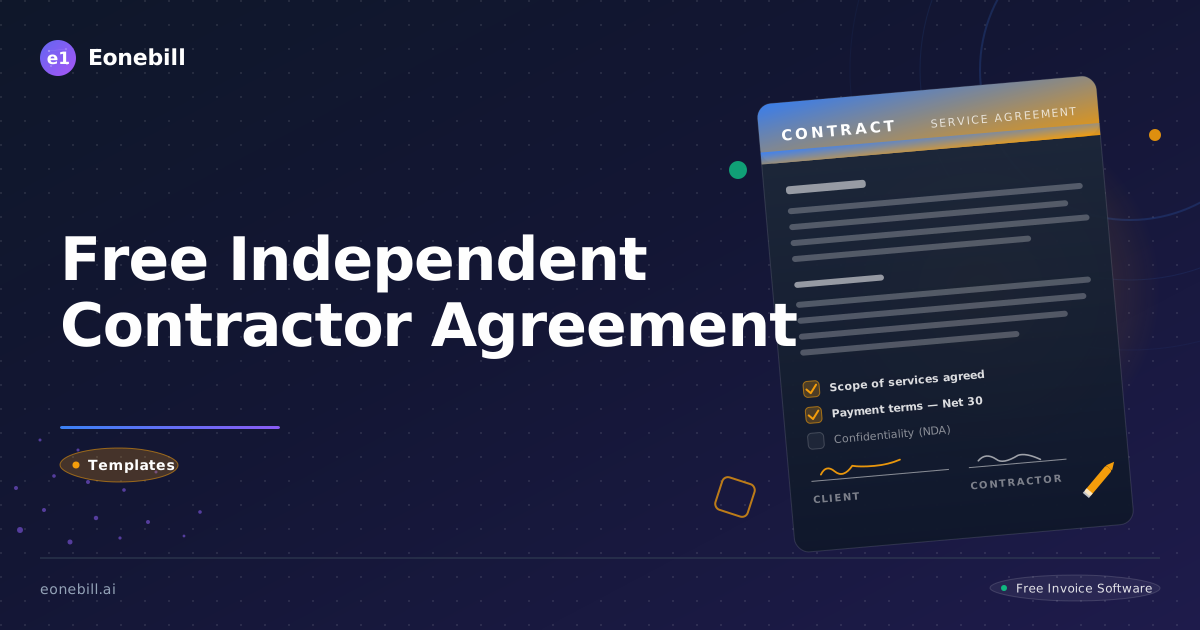
Free Independent Contractor Agreement Template — Protect Your Freelance Work
Free Independent Contractor Agreement Template — Protect Your Freelance Work
An independent contractor agreement is the single most important document any freelancer or 1099 worker can have. Before a single hour is logged or a single deliverable produced, this agreement defines the working relationship between you and your client, protects your intellectual property, sets clear payment expectations, and — critically — establishes in writing that you are a contractor, not an employee. Without it, you are working on trust alone, and trust does not hold up in a dispute, a tax audit, or a payment-withholding situation. The five minutes it takes to customize and sign a contractor agreement is one of the highest-leverage actions you can take for your freelance business.
This guide covers everything a freelancer, consultant, or independent professional needs to know about independent contractor agreements: what they are, how they differ from employment agreements and statements of work, what clauses every solid agreement must contain, and how to get yours signed and stored before you start a single minute of billable work. Whether you are a first-time freelancer setting up your business or an experienced contractor reviewing your standard paperwork, this is the reference you need.
What Is an Independent Contractor Agreement Template?
An independent contractor agreement — sometimes called a 1099 agreement, freelance agreement, or contractor agreement — is a legally binding contract between a business (the client) and an independent contractor (you) that defines the terms of their working relationship. It is the foundational document for any freelance engagement, and it serves two equally important purposes: it protects both parties by making expectations explicit, and it legally establishes the nature of the relationship as contractor-client rather than employer-employee.
The distinction from an employment agreement is fundamental. An employment agreement creates an employer-employee relationship: the employer directs how, when, and where work is performed; withholds payroll taxes; provides benefits; and has ongoing obligations to the employee under labor law. An independent contractor agreement does the opposite — it explicitly states that no such relationship is created, that the contractor controls how and when work is performed, that the contractor is responsible for their own taxes (including self-employment tax), and that the contractor is not entitled to employee benefits. This distinction matters enormously for tax purposes, liability, and the rights each party retains.
It is also important to understand how an independent contractor agreement differs from a statement of work (SOW). The contractor agreement establishes the master terms for the entire relationship — IP ownership, confidentiality, payment terms, dispute resolution — and typically covers all engagements between the parties. A statement of work, by contrast, covers the specifics of a single project: the deliverables, timeline, and project-specific scope. Many freelancers use a master contractor agreement paired with project-specific SOWs, which is an efficient structure that avoids re-negotiating foundational terms every time a new project begins.
What Should an Independent Contractor Agreement Template Include?
A professionally drafted independent contractor agreement must contain eight core clauses. Each one serves a specific legal and practical function, and each gap you leave creates a potential dispute.
1. Identification of the Parties. The agreement must clearly state the full legal names of both the contractor and the client company. For business entities, include the entity type — "Acme Marketing LLC, a Delaware limited liability company" rather than just "Acme Marketing." This specificity matters if you ever need to enforce the agreement, because you need to identify precisely which legal entity you have a contract with.
2. Relationship Clause. This is arguably the most important clause in the entire agreement, and it is often the one most templates handle poorly. The relationship clause must explicitly state that the contractor is an independent contractor and not an employee, agent, or partner of the client. It should specify that the contractor controls the means and methods of performing the work, that the contractor is responsible for their own taxes and insurance, and that nothing in the agreement creates an employment relationship. The IRS and many state labor agencies use the actual substance of this clause — along with the facts of how the work is performed — to determine worker classification, which has major tax implications for both parties.
3. Scope of Work. This clause describes what the contractor will deliver — the services, deliverables, or projects covered by the agreement. For master agreements, this can be high-level ("software development services as described in project-specific statements of work"). For single-project agreements, this should be specific enough to identify completion. A clear scope of work prevents scope creep disputes and sets the baseline for what the client is paying for.
4. Compensation and Payment Terms. Detail the rate structure (hourly, project-based, retainer), the payment schedule, and the payment method. Include the invoice cycle — for example, "contractor will submit invoices on the first of each month" — and the payment due date (net 15, net 30, etc.). Specify any late payment penalties. Vague payment terms are one of the leading causes of freelance payment disputes.
5. Intellectual Property Ownership. This clause determines who owns the work product created under the agreement, and it must be handled with great care. There are two main approaches: work for hire, where all IP created by the contractor is assigned to the client upon payment; and retained IP, where the contractor retains ownership and grants the client a license to use the work. The default under US copyright law can favor the contractor in many situations, so clients often require explicit work-for-hire language. Whatever approach you use, make it unambiguous. Vague IP clauses are the source of expensive post-project disputes, especially in creative, software, and consulting engagements.
6. Confidentiality Obligations. Many contractor agreements include a confidentiality clause covering the client's proprietary information — business plans, customer data, unreleased products, financial information — that the contractor will access during the engagement. This serves a similar function to a standalone NDA but is incorporated directly into the contractor agreement. If the parties have a separate NDA, the contractor agreement should reference it.
7. Termination Clause. This clause specifies how either party may end the engagement, including notice requirements (typically 14 or 30 days written notice), termination for cause provisions (immediate termination for material breach), and — critically — what happens to work in progress and payment obligations upon termination. A kill fee provision, which requires the client to pay a percentage of remaining project fees if they terminate without cause, is strongly recommended for project-based engagements.
8. Governing Law and Dispute Resolution. This clause specifies which state's laws govern the agreement and how disputes will be resolved — litigation, mediation, or arbitration. For freelancers working with clients in different states, this clause saves enormous confusion if a dispute arises. Include the specific state and, for litigation, the county or district where any legal proceedings will occur.
How to Use an Independent Contractor Agreement Template in 5 Steps
Step 1: Review the full scope of the engagement before opening the template. Before you customize anything, sit down and document what you will actually be doing for the client: deliverables, timeline, rate, and any specific IP or confidentiality considerations. Having this information clear before you open the template means you will not leave placeholder language in the document or — worse — sign an agreement before you have thought through the terms.
Step 2: Download and open the template. Go to /contract-template/independent-contractor to access the free Eonebill independent contractor agreement template. The template is structured for US freelancers and 1099 workers, with all eight clauses outlined above already included and labeled.
Step 3: Customize the IP and relationship clauses carefully. These two clauses are the most frequently disputed and the most frequently botched. In the relationship clause, make sure the language is unambiguous that you are a contractor. In the IP clause, decide whether you are assigning all rights, retaining rights and granting a license, or using a hybrid approach — and make that decision explicit. Do not leave any placeholder or ambiguous language in either clause.
Step 4: Add project-specific details and review the complete document. Fill in the parties, scope, compensation terms, payment schedule, confidentiality obligations, termination provisions, and governing law. Then read the entire agreement once from beginning to end as if you were the client — identifying any clause you would object to or any term that is unclear. Fix anything that would not survive that review.
Step 5: Send for e-signature and begin work only after both parties have signed. Use /free-tools/e-signature-maker to send the agreement for electronic signature. Both parties should sign and receive a copy before any work begins. Do not start a project based on a verbal OK, an email approval, or a promise to "sign it later." The agreement only protects you once it is signed by both parties.
Free Independent Contractor Agreement Template: Download and Customize
Eonebill provides a professionally drafted, free independent contractor agreement template built for US freelancers, consultants, and 1099 workers. You can access, customize, and download the independent contractor agreement template at /contract-template/independent-contractor without creating an account. The template includes all eight clauses described in this guide, with inline guidance notes that explain what each clause means and what you should customize for your specific engagement.
For freelancers who work with multiple clients or need to generate contracts, invoices, and other business documents regularly, the Eonebill Pro plan at /pricing gives you access to the full document template library, unlimited contract generation, built-in e-signature collection, and the ability to save client profiles so repeat engagements take minutes rather than hours to set up.
Best Practices for Independent Contractors
Sign the agreement before starting any work — no exceptions. It is easy to rationalize beginning a project based on a verbal agreement or a strong relationship with a client, but the protections in your contractor agreement only apply from the date of signing. Work performed before signing is unprotected work. Make the signed agreement a literal precondition of starting, not a formality you will handle later.
Keep your contractor agreement and your statement of work as separate documents. The contractor agreement covers the master relationship terms that should remain consistent across projects with the same client. The SOW covers the specific deliverables, timeline, and scope for each project. Mixing them creates confusion and forces you to re-negotiate foundational terms every time you start a new engagement.
Be exhaustively explicit about intellectual property. In creative, technical, and consulting work, IP ownership disputes are among the most financially damaging and emotionally costly conflicts a freelancer can face. Do not rely on implied terms or verbal understandings. Spell out exactly who owns what, under what conditions, and what rights are transferred upon payment.
Include a kill fee for project-based work. A kill fee — typically 25 to 50 percent of remaining project fees payable by the client upon early termination without cause — protects you from losing income when a client cancels a project mid-stream. Clients who are serious about the engagement will accept a reasonable kill fee; those who push back hardest are often the clients most likely to cancel.
Keep organized, searchable copies of every signed agreement. Store executed contracts in a dedicated folder organized by client name and year. Cloud storage with version control is ideal. You will be grateful for this organization the first time a dispute arises about what was agreed to, when the agreement was signed, or what the IP terms were for a project you completed two years ago.
Common Mistakes to Avoid
Starting work before the agreement is signed is the single most common and most costly mistake freelancers make. No matter how trusted the client, how small the project, or how urgent the deadline — work without a signed agreement is unprotected work. The five minutes it takes to send and sign a contractor agreement is not optional; it is the price of admission for professional freelancing.
Using a generic employment contract template — or repurposing an employment agreement — for contractor work is a serious error. Employment contracts are designed to create the employer-employee relationship that contractor agreements are specifically designed to avoid. Using the wrong template type can create unintended legal obligations, confuse the nature of the relationship, and cause problems in an IRS audit or a worker classification dispute.
Writing a vague IP clause because the conversation feels awkward is a mistake that seems minor until it is not. Phrases like "the client will own the work" or "the contractor retains their IP" without specifics create ambiguity about what "work" or "IP" means — does it include background IP the contractor brings to the project? Does it include derivative works? Specify exactly what is transferred, when, and under what conditions.
Omitting payment terms — or stating them vaguely — is a reliable path to payment disputes. "Payment due upon completion" is not a payment term; it is an invitation to argue about what "completion" means. Specify the invoice cycle, the due date in days, and any late penalties. Clear payment terms are the foundation of a healthy client-contractor financial relationship.
Skipping the relationship clause because it seems like legal boilerplate is a mistake with real tax and legal consequences. The relationship clause is not boilerplate — it is the legal mechanism that establishes your status as a contractor. Without it, the nature of your working relationship is determined by facts and conduct rather than by your written agreement, which exposes both you and your client to potential worker misclassification liability.
Frequently Asked Questions
What is an independent contractor agreement?
An independent contractor agreement is a legally binding contract between a business and an independent contractor (freelancer, consultant, or 1099 worker) that defines the terms of their working relationship — including the scope of work, compensation, intellectual property ownership, confidentiality obligations, and the contractor's status as a non-employee. It is also called a freelance agreement, 1099 agreement, or contractor agreement.
What is the difference between an independent contractor and an employee?
The key difference is control and tax treatment. An employee works under the direction and control of the employer, who dictates how, when, and where work is performed and withholds payroll taxes. An independent contractor controls how and when work is performed, is responsible for their own taxes (including self-employment tax), is not entitled to employee benefits, and is engaged for specific outcomes rather than ongoing directed labor. The IRS uses a multi-factor test to determine classification, and the written agreement is one important factor.
What should an independent contractor agreement include?
A complete independent contractor agreement should include: identification of both parties, an explicit relationship clause establishing contractor (not employee) status, scope of work, compensation and payment terms, intellectual property ownership provisions, confidentiality obligations, a termination clause with kill fee provisions, and governing law and dispute resolution terms. All eight of these elements are included in the free template at /contract-template/independent-contractor.
Is a free contractor agreement template legally binding?
Yes — a free contractor agreement template is legally binding as long as it contains the essential elements of a valid contract: offer, acceptance, consideration, and mutual assent indicated by signatures from both parties. The fact that the template is free has no bearing on its enforceability. What matters is that the agreement is properly customized, accurately reflects the parties' intent, and is signed by both the contractor and the client before work begins.
Do I need a new agreement for every project?
Not necessarily. Many freelancers use a master independent contractor agreement that covers the foundational relationship terms — IP, confidentiality, payment structure, dispute resolution — which they execute once with a client. Individual projects are then documented in separate statements of work that reference the master agreement. This is efficient for ongoing client relationships. For first-time engagements or single projects with new clients, a complete contractor agreement covering both relationship terms and project specifics is appropriate.
Ready to manage invoices, contracts & proposals in one place? Try Eonebill free — no credit card required.
Start Free →Frequently Asked Questions
More Posts
Filing Taxes Late: Penalties, Extensions, and How to Catch Up (2026)
Missed the April deadline? Understand the 5 percent failure-to-file vs 0.5 percent failure-to-pay penalty difference, how Form 4868 extensions help, and the four-step protocol for catching up on years of unfiled returns.
Penalties for Not Filing a 1099: What Freelancers and Small Businesses Need to Know (2026)
Failing to file 1099 forms on time triggers escalating IRS penalties from 60 to 660 dollars per form. Learn the four-tier schedule, how to fix a missed filing, and when First-Time Penalty Abatement applies.

How to Write a Gentle Reminder Email (Templates + Examples)
Learn how to write a professional gentle reminder email that gets results. Includes 8 ready-to-use templates for invoices, meetings, deadlines, and more.
Newsletter
Join the community
Subscribe to our newsletter for the latest news and updates