Collection Call Script Examples: Get Paid Without Losing the...
Proven collection call scripts for freelancers and small businesses. Real conversation examples for handling overdue invoices, objections, and securing payment commitments from clients.
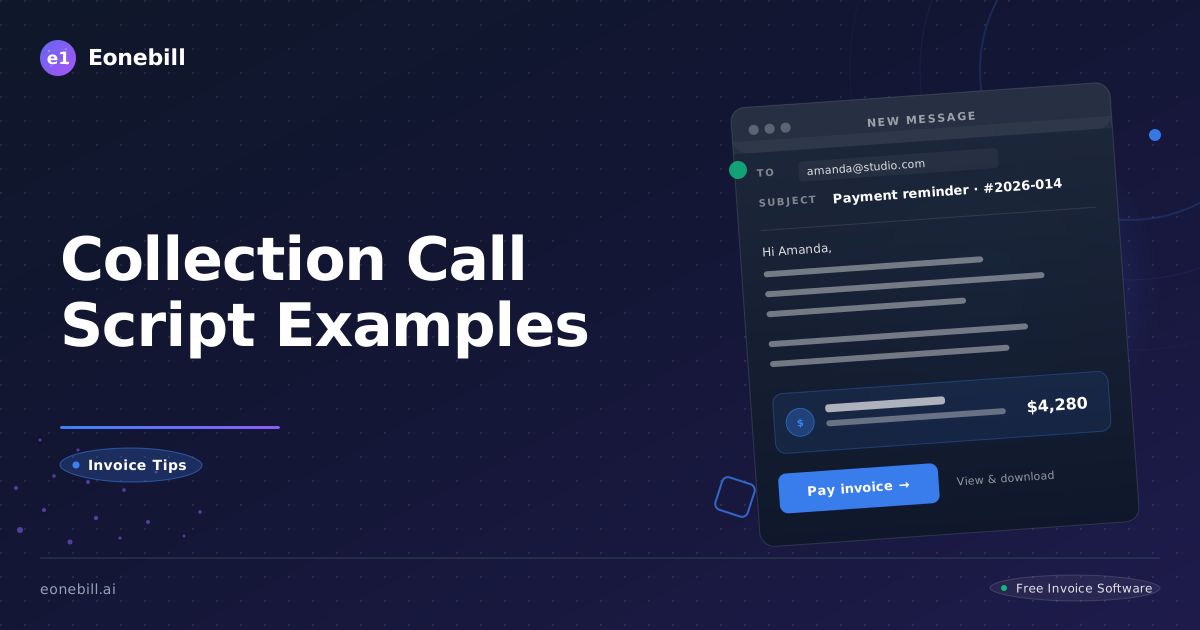
Phone calls are the most effective way to collect overdue payments—yet most freelancers avoid them. They fear confrontation, worry about damaging relationships, and simply don't know what to say.
The result: invoices go unpaid, cash flow suffers, and months later they're sending collection notices that should have been unnecessary.
Here's the truth: a well-prepared collection call is one of the most professional things you can do. You're calling about money that's legitimately owed to you. You're not begging—you're asking for what's yours.
These proven scripts and examples will help you handle every situation with confidence.
Before You Call: Preparation Checklist
Every collection call should take no more than 5-10 minutes. Preparation makes the difference:
- [ ] Pull up the invoice: number, date, amount, original due date
- [ ] Check your notes: any prior emails, conversations, or promises made?
- [ ] Know your bottom line: what's the minimum you'll accept today?
- [ ] Have a pen and paper ready to take notes
- [ ] Set a specific goal for this call: full payment, payment plan, or at minimum a dated commitment
The Opening Script (30 Seconds)
The opening sets the tone. Warm, professional, direct:
> You: "Hi [Client Name], this is [Your Name] from [Your Company]. I'm calling about Invoice #[X] for $[Amount] that was due on [Due Date]. Do you have a moment to speak?"
If they say they're busy:
> You: "Of course—I completely understand. When would be a good time to reach you for a quick five-minute call about this invoice? I have some time [suggest 2-3 specific windows]."
Key: Don't apologize for calling. You're calling about a legitimate business matter.
Scenario 1: The Friendly Client (Easy Collection)
Situation: The client is cooperative, the invoice is only slightly overdue, and they likely just forgot.
> You: "Hi [Name], this is [Your Name] from [Company]. I'm calling about Invoice #[X] for $[Amount] which was due on [Due Date]. Do you have a moment?"
>
> Client: "Oh hey, [Your Name]. Yeah, I saw that. Sorry about that—things have been crazy here. Let me get that taken care of."
>
> You: "No problem at all. I completely understand. Just to confirm, you're saying you'll send payment by [specific date—3-5 business days out]? That works great on our end."
>
> Client: "Yeah, I'll get it out by Thursday."
>
> You: "Perfect. I'll look for it Thursday. And I'll send a confirmation email right now so you have everything you need on your end. Thanks so much, [Name]—talk soon."
What to accomplish: Get a specific, dated commitment. Follow up with written confirmation email immediately.
Scenario 2: The Client Who Claims They Didn't Receive the Invoice
Situation: Client disputes receiving the invoice—possibly legitimate, possibly a stalling tactic.
> You: "Hi [Name], this is [Your Name] from [Company]. I'm calling about Invoice #[X] for $[Amount]. I wanted to follow up personally because I haven't received payment and I want to make sure we're on the same page."
>
> Client: "Hmm, I don't think we ever received that invoice. Things must have gotten lost."
>
> You: "That's a concern—I'm sorry to hear that. Let me resend it right now. Can you confirm the best email address for accounts payable? I want to make sure it goes directly to the right person."
>
> Client: "Yeah, it's accounts payable at [email]."
>
> You: "Got it. I'm resending it right now to accounts payable at [email]. Once you receive it, can you let me know when you expect it to be processed in your AP system? I want to make sure we have it on your radar."
>
> Client: "Sure, I'll take a look and get back to you."
>
> You: "Thanks, [Name]. And while we're talking—is there anything else related to this project or invoice we should address? I want to make sure everything is clear on both ends."
What to accomplish: Resend the invoice immediately. Get a specific timeline for payment processing. Open the door for other potential issues.
Scenario 3: The Client Who Says "We Have Budget Issues"
Situation: Client acknowledges the invoice but claims they can't pay due to cash flow or budget constraints.
> You: "Hi [Name], this is [Your Name] from [Company]. I'm calling about Invoice #[X] for $[Amount] that's now [X] days past due. I wanted to reach out personally to see how we can resolve this."
>
> Client: "Honestly, we've had some serious budget constraints this quarter. We're not going to be able to pay until things pick up—probably next month."
>
> You: "I hear you—budget tightness happens to every business. I want to find a way forward that works for both of us. What I can do is offer a structured payment arrangement if that helps bridge the gap. Would it be possible to pay [50% now / a specific amount] within the next [7-10 days] and the remainder [50% / amount] in [30 days]? That way we can close the books on this and keep our relationship in great standing."
>
> Client: "Let me see... we might be able to do 40% now."
>
> You: "I appreciate you working with me on this. 40% now, 60% in 30 days—that works for me. So that means you'll send [40% amount] by [specific date—7 days out] and the remaining [60% amount] by [specific date—37 days out from today]. Is that right?"
>
> Client: "Yeah, that sounds doable."
>
> You: "Great. I'm going to send you a written confirmation of this arrangement right now, and I'll send a reminder before each payment date. If anything changes on your end, please reach out to me directly so we can adjust. Thank you, [Name]—I really appreciate your professionalism on this."
What to accomplish: Negotiate a payment plan. Get specific dates for each payment. Confirm in writing immediately.
Scenario 4: The Client Who Deflects ("I'll Pay Next Month")
Situation: Client gives vague non-commitments without specifics.
> You: "Hi [Name], this is [Your Name] from [Company]. I'm calling about Invoice #[X] for $[Amount] that's now [X] days past due. I wanted to check in and see where things stand."
>
> Client: "Oh yeah, we're aware of it. Things have been busy. We'll get to it next month."
>
> You: "I appreciate that. 'Next month' is a bit vague for me to track. Can I ask—what specifically are we looking at? Is that the first week of next month, the middle? I just want to make sure I have it right so I can flag it in our system."
>
> Client: "Probably the first week of next month."
>
> You: "So that's approximately [specific date range—first week means no later than the 7th]. So I can expect payment by then?"
>
> Client: "Yeah, that should work."
>
> You: "Perfect. I'll mark that for [Date]. And [Name], just so we're clear—if anything changes between now and then, please give me a heads up so we're not caught off guard. And I'll send a confirmation email right now summarizing our conversation and the payment date."
What to accomplish: Don't let them off with vague promises. Pin them to a specific date.
Scenario 5: The Client Who's Hostile or Rude
Situation: Client gets defensive, aggressive, or rude during the call. Stay calm.
> You: "Hi [Name], this is [Your Name] from [Company]. I'm calling about Invoice #[X] for $[Amount]."
>
> Client: "Look, I don't have time for these calls. We've been through this. We'll pay when we pay."
>
> You: "I hear you, [Name], and I appreciate you taking the call. I just want to be straightforward with you: this invoice is [X] days overdue and I have a responsibility to my business to follow up on it. I'm not looking to create conflict—I'm just looking for a resolution. Can you help me understand where things stand? Is there a specific date we can mark for payment?"
>
> Client: "I told you, we'll pay."
>
> You: "I understand. And I believe you. What I need is a specific date so I can close this out on my end. Is there a date I can put in my system—something like [suggest a date 5-7 days out]?"
>
> [If they continue to be hostile:]
>
> You: "I appreciate you taking my call today, [Name]. I understand this isn't a convenient conversation. I'll send a follow-up email summarizing what we've discussed and confirming the payment date you've committed to. If anything changes, please reach me directly at [email/phone]. Thank you."
Key: Never match hostility with hostility. Stay professional and calm. Document everything. Escalate to written communication and formal notices if hostile behavior continues.
Scenario 6: The Client Who Has a Legitimate Dispute
Situation: Client claims the work wasn't delivered correctly or there's a genuine quality issue.
> You: "Hi [Name], this is [Your Name] from [Company]. I'm calling about Invoice #[X] for $[Amount] that's [X] days past due. I wanted to reach out and see if there's anything on your end I should know about."
>
> Client: "Actually, we've been meaning to talk to you about this. The work you delivered on [specific deliverable] wasn't what we agreed on. We're not happy with it."
>
> You: "I'm sorry to hear that—I want to make sure you're satisfied. Can you help me understand what wasn't delivered as expected? [Listen carefully.] And what would you need to see to feel this is resolved?"
>
> [After listening carefully:]
>
> You: "Thank you for sharing that—I genuinely appreciate you giving me the chance to address this. Based on what you've described, here's what I propose: [specific resolution—credit, partial refund, re-do, etc.]. Would that work for you? And once we've resolved your concern, can we set a payment date of [specific date] for the invoice?"
>
> Client: "If you can [resolution], then yes, we'll pay by [date]."
>
> You: "Perfect. I'm going to send you an email right now confirming both the resolution we've agreed to and the payment date. Thank you, [Name]—I really value our working relationship and I want to make sure we're both satisfied."
Key: Dispute handling requires empathy first. Listen, acknowledge, propose a fair resolution, then reconnect it to payment.
Scenario 7: The Voicemail Script
When you can't reach them directly, leave a professional voicemail:
> "Hi [Name], this is [Your Name] from [Company] at [phone number]. I'm calling about Invoice #[X] for $[Amount] which is currently [X] days past due. I'd like to speak with you briefly to confirm payment arrangements. Please give me a call back at [phone number] at your earliest convenience. If you've already sent payment, I appreciate it—just wanted to confirm receipt. Thank you."
Tips for voicemails:
- Keep it under 30 seconds
- State your name, company, and reason clearly
- Don't leave a callback number that makes you sound desperate
- Always mention the invoice number and amount
- Mention if payment has already been sent (in case it has and you just missed each other)
After Every Call: The Follow-Up Email
Within 15 minutes of ending the call, send this:
> Subject: Collection Call Summary — Invoice #[X] — [Your Company]
>
> Hi [Client Name],
>
> Following up on our call today. As discussed, [summary of what was agreed: payment amount, payment date, payment plan, dispute resolution].
>
> To confirm:
> - Invoice: #[X]
> - Amount Outstanding: $[Amount]
> - Payment Date Committed: [Date]
>
> If anything changes, please reach me directly at [phone/email] so we can adjust accordingly.
>
> Thank you,
> [Your Name]
> [Company]
The 5 Rules of Collection Calls
- Be warm, not aggressive. You're collecting from a client, not confronting a debtor.
- Listen more than you talk. Their response tells you how to proceed.
- Never end a call without a specific dated commitment. "Soon" is not a payment date. A calendar date is.
- Document everything immediately. After every call, send the follow-up email while the conversation is fresh.
- Know when to escalate. After 30 days of no response, move to formal written notices and certified letters. After 60-90 days, consider collections or legal action.
The Bottom Line
Collection calls don't have to be dreaded. With the right preparation and scripts, they're professional, efficient, and remarkably effective. Most clients respond positively to a direct, empathetic call—they respect that you're following up, and they want to resolve the matter.
The goal isn't confrontation—it's resolution. Keep that in mind, use these scripts as your framework, and always end every call with a specific, dated payment commitment.
Need automated invoice reminders so you never have to make as many collection calls? Try Eonebill Free
Ready to manage invoices, contracts & proposals in one place? Try Eonebill free — no credit card required.
Start Free →Frequently Asked Questions
More Posts
Filing Taxes Late: Penalties, Extensions, and How to Catch Up (2026)
Missed the April deadline? Understand the 5 percent failure-to-file vs 0.5 percent failure-to-pay penalty difference, how Form 4868 extensions help, and the four-step protocol for catching up on years of unfiled returns.
Penalties for Not Filing a 1099: What Freelancers and Small Businesses Need to Know (2026)
Failing to file 1099 forms on time triggers escalating IRS penalties from 60 to 660 dollars per form. Learn the four-tier schedule, how to fix a missed filing, and when First-Time Penalty Abatement applies.

How to Write a Gentle Reminder Email (Templates + Examples)
Learn how to write a professional gentle reminder email that gets results. Includes 8 ready-to-use templates for invoices, meetings, deadlines, and more.
Newsletter
Join the community
Subscribe to our newsletter for the latest news and updates